
Best Firewood Types Ranked: Ash, Beech, Birch, Cherry, and Maple Compared
August 30, 2026
Getting the Most Heat Out of Your Maple
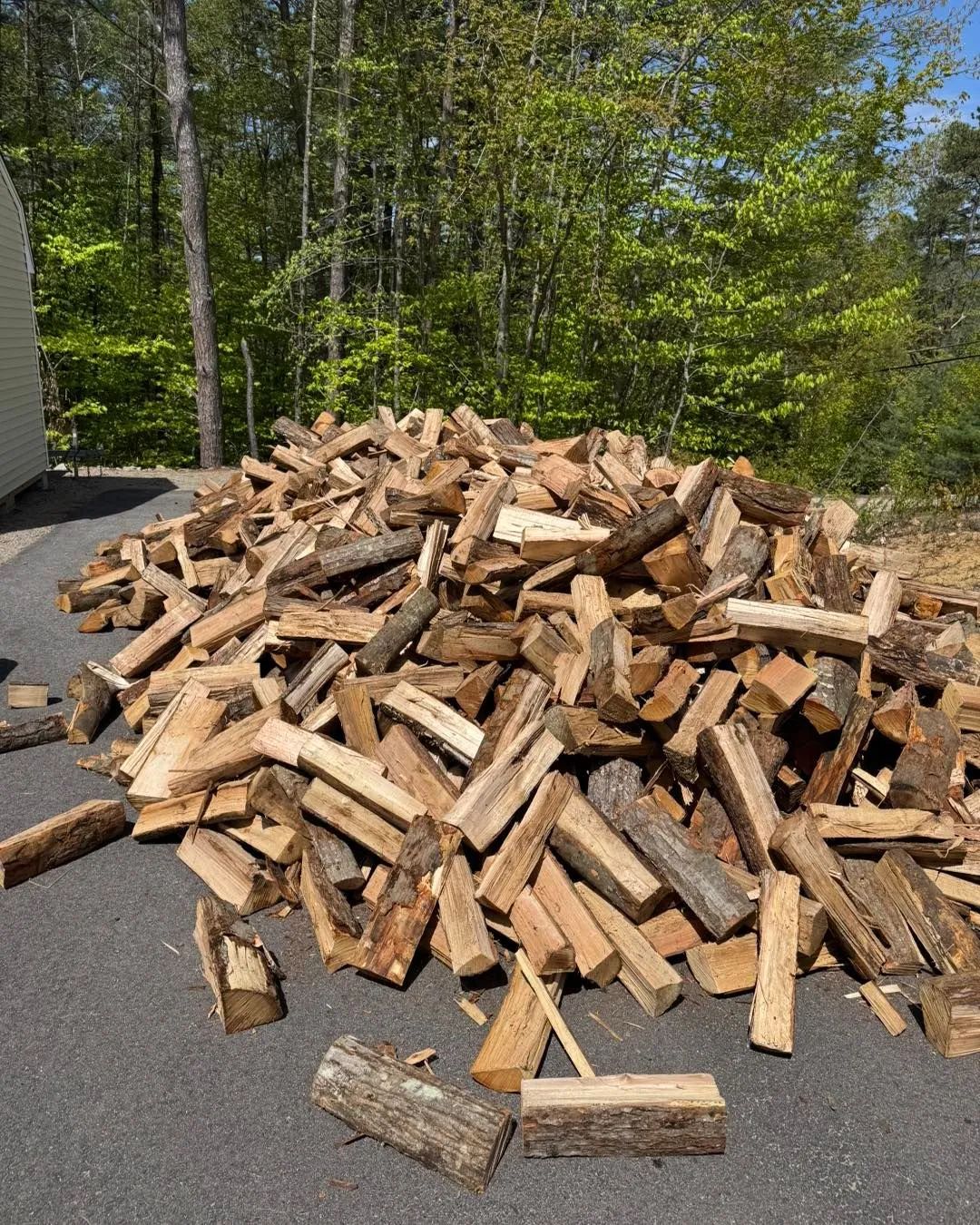
Plan a season ahead and maple rewards you. Get it split by late spring while it's still green and easy, stack it single-row off the ground where sun and wind can reach it, and cover only the top so the sides keep breathing. Come the first cold snap, you'll have wood that lights without a fight, throws steady heat, and holds a fire through the night. Sort the hard from the soft as you stack, save the sugar maple for the deep-freeze nights, and burn the lighter stuff earlier in the season when you don't need the stove roaring.
Firewood Supply New Hampshire, based in Middleton with over 7
years of experience, tests every load of seasoned maple under 20 percent moisture before it leaves the yard. That means no guessing whether a delivery is ready to burn or another season away from it — just dependable, clean-splitting hardwood that lights easily and holds heat through the coldest nights. Deliveries run across the Lakes Region and Seacoast, so the wood shows up seasoned and ready well before winter settles in.
Quick Answer: Beech and sugar maple top the BTU chart among these five hardwoods, both landing in the 22 to 24 million BTU per cord range, with ash close behind and known for splitting easier and seasoning faster. Birch lights fastest thanks to its oily, papery bark, but burns down quicker than the denser woods, so it works best mixed in rather than carrying an overnight fire alone. Cherry produces the least heat of the five yet earns its keep with a sweet smoke and excellent coaling, which is why cooks reach for it first. For sustained winter heat, beech, maple, and ash lead. For quick kindling and pleasant aroma, birch and cherry fill in the gaps.
You stack a load of split hardwood by the back door in October, and by January you'll know exactly which rounds you should've bought more of. Some logs catch in seconds and burn down to ash before the coffee's even finished. Others sit there smoking, refusing to commit, until they finally settle into coals that hold heat past midnight. Ash, beech, birch, cherry, and maple are the five hardwoods you'll see most often at a New Hampshire woodlot, and each one behaves differently in a stove or fireplace. Knowing the differences before you order changes how you heat your house all winter.
How These Five Hardwoods Stack Up
Heat output gets measured in BTUs per cord, a rough gauge of how much energy a fully seasoned cord of that species releases when it burns. Density drives most of the difference. Denser wood packs more fuel into the same space, which means more heat and longer-lasting coals. But density also means the wood holds more moisture when it's green, so the densest species usually need the most time to season properly.
Splitting ease, smoke output, and how the bark and grain behave when the wood is fresh all matter just as much as raw BTU numbers, especially if you're the one running the maul. A wood that burns hot but fights you every time you split it isn't necessarily the better buy for a homeowner working through a season's supply by hand.
Ash: Fast to Season, Easy to Split, Reliable Heat
White ash lands in the 21 to 24 million BTU per cord range, putting it near the top of this group without the long wait beech and maple demand. Ash has a reputation among woodlot operators for splitting cleanly along a straight grain, even when it's not fully dry, which makes it forgiving for anyone still building up their technique with a maul or hydraulic splitter.
What really sets ash apart is how fast it seasons. Where beech can take a year and a half or more to drop to burnable moisture levels, ash often gets there in six months to a year under decent stacking conditions. That's a real advantage if you're catching up late in the season or you didn't get last spring's wood in early enough. Ash burns with low smoke and builds a solid coal bed, so it holds heat well through the evening without the sparking some other species produce.
Beech: Dense Heat That Rewards Patience
Beech burns as hot as anything on this list, often edging past 23 million BTU per cord for American beech and even higher for some regional varieties. That density is exactly why it needs more patience than ash or cherry. Green beech holds a lot of moisture, and it typically needs twelve to eighteen months of proper stacking and airflow before it's ready to burn clean. Rush it, and you'll get a smoky, hissing fire that wastes half the wood's potential.
Splitting beech is where the tradeoff shows up. The grain twists more than ash, so rounds tend to fight back, especially the bigger ones. Once it's seasoned, though, beech rewards the wait. It builds a deep coal bed that holds overnight heat about as well as any hardwood in New Hampshire, which is exactly what you want on a January night when the temperature drops into the single digits.
TIP: Split beech and other dense hardwoods while the rounds are still fresh. Green wood splits far easier than wood that's already dried and set, and waiting even a few weeks can turn an easy job into a fight with the maul.
Birch: The Fastest Light in the Stack
Birch is the odd one out here, and it's honest about it. Paper and white birch run lower on the BTU chart, closer to 20 million per cord, with yellow birch coming in a bit hotter around 22 million. What birch lacks in raw heat, it makes up for in how fast it gets a fire going. The bark holds natural oils that catch a spark almost instantly, even on a damp morning, which is why so many people peel a strip of birch bark and use it as a fire starter before the split wood ever gets involved.
That same trait works against birch over a long, sustained burn. It lights fast and burns down fast, producing more smoke than ash or beech along the way. On its own, birch won't carry a fire through a cold night. Mixed with a denser species like beech or maple, though, it earns its place, getting the fire established quickly while the harder wood takes over the heavy lifting.
Birch also needs attention while it's seasoning. Left as whole rounds too long, the wet inner wood can start breaking down under that tight bark before it ever dries, so splitting it sooner rather than later matters more with birch than it does with ash or maple.
Cherry: Built for the Nose as Much as the Stove
Cherry produces the least heat of the five, typically landing around 19 to 20 million BTU per cord, which puts it below ash, beech, and sugar maple on a pure output basis. What cherry gives up in BTUs, it gives back in almost everything else. It splits easily even at moderate moisture, seasons in roughly six months to a year, and burns with a noticeably sweet smell that fills a room in a way none of the other four species do.
That aroma is exactly why cooks and smokers reach for cherry first. It's a favorite for smoking meat and running a backyard pizza oven, where the goal isn't maximum BTUs but a clean, pleasant smoke that doesn't overpower the food. In a wood stove or fireplace, cherry still holds its own. It builds excellent coals for a wood of its density, so while it may not be the wood you count on for the coldest week of February, it's often the one people ask for by name.
Maple: The All-Around Performer
Maple covers a wide range depending on which variety lands on your truck. Sugar maple burns hot, often landing near beech in the 23 to 24 million BTU per cord range, while red maple runs noticeably cooler, closer to 18 to 20 million. Most firewood loads mix several maple varieties together, which is part of why maple has a reputation as the dependable, do-everything wood. It splits easily, seasons in about twelve to eighteen months, and produces excellent coals with low smoke across the board.
If you had to load a stove with just one species for the whole winter, maple is the safest bet of the five. It's not the absolute hottest, and it's not the fastest to light, but it doesn't have a real weakness either. That balance is exactly why so many New Hampshire wood stoves run on maple more nights than any other species.
Comparing the Five at a Glance
| Species | BTU per Cord (approx.) | Seasoning Timeame | Splitting Ease | Smoke Level | Best For |
|---|---|---|---|---|---|
| Ash | 21 to 24 million | 6 to 12 months | Easy | Low | Fast-turnaround heat |
| Beech | 22 to 24 million | 12 to 18+ months | Difficult | Low | Overnight coals |
| Birch | 20 to 22 million | 12 to 24 months | Medium | Medium | Kindling, quick starts |
| Cherry | 19 to 20 million | 6 to 12 months | Easy | Low | Cooking, aroma |
| Maple | 18 to 24 million | 12 to 18 months | Easy | Low | All-around burning |
How These Five Hardwoods Stack Up
Heat output gets measured in BTUs per cord, a rough gauge of how much energy a fully seasoned cord of that species releases when it burns. Density drives most of the difference. Denser wood packs more fuel into the same space, which means more heat and longer-lasting coals. But density also means the wood holds more moisture when it's green, so the densest species usually need the most time to season properly.
Splitting ease, smoke output, and how the bark and grain behave when the wood is fresh all matter just as much as raw BTU numbers, especially if you're the one running the maul. A wood that burns hot but fights you every time you split it isn't necessarily the better buy for a homeowner working through a season's supply by hand.
Matching the Wood to How You're Actually Burning
None of these species is wrong. They're built for different jobs. If you're loading a stove for an overnight burn in the middle of a Lakes Region winter, beech and sugar maple hold coals the longest and keep the house warm until you reload in the morning. If you're building a quick fire in the fireplace after supper and don't need it to last past bedtime, ash gets going fast and doesn't leave you fighting green wood.
Birch earns its keep as the fire-starter of the group. Keep a few split pieces near the kindling, not the main woodpile, and use it to get denser species burning on a cold morning when everything feels stubborn. Cherry belongs wherever the smell matters as much as the heat, whether that's a smoker, an outdoor fire pit on a Seacoast evening, or just a fireplace you want smelling good for company. And if you're not sure which way to lean, a mixed load of maple and ash covers most situations a New Hampshire heating season throws at you.
Seasoning is the variable that decides whether any of these species performs the way the numbers suggest. Wood that's still green burns cooler, smokes more, and wastes energy boiling off trapped moisture before it ever produces real heat. Buying seasoned hardwood, or getting green wood stacked early enough to dry properly before the cold sets in, matters more than which species you pick.
WARNING: Burning unseasoned or improperly dried wood, especially denser species like beech and maple that hold moisture longest, can lead to heavy creosote buildup inside a chimney. Have your chimney inspected regularly if you're burning wood that hasn't had a full season to dry.
Frequently Asked Questions
Which firewood burns hotter, ash or maple?
Sugar maple usually edges out ash by a small margin, both landing in the low-to-mid 20 million BTU per cord range. Red maple, though, runs cooler than ash, so the answer depends on which maple variety you're comparing.
Is birch good for an overnight fire?
Not on its own. Birch lights fast and burns hot early, but it burns down quicker than denser woods like beech or maple. Mix it with a slower-burning species if you need the fire to last through the night.
How long does beech need to season before it's ready to burn?
Plan on twelve to eighteen months for beech, longer than ash or cherry. Its density holds moisture well after splitting, so rushing the timeline leaves you with a smoky, less efficient fire.
What makes cherry firewood good for cooking and smoking?
Cherry burns with a sweet, mild smoke that doesn't overpower food, which is why it's a favorite for smokers and backyard pizza ovens. It also splits easily and seasons faster than most of the denser hardwoods on this list.
Can you mix ash, beech, birch, cherry, and maple in the same fire?
Yes, and mixing species is common practice. Birch or ash gets a fire established quickly, while beech or maple carries the heat once the fire is going, giving you a fast start and a long, steady burn in the same load.
Which of these five woods is the easiest to split?
Ash, cherry, and maple all split relatively easily, especially when the rounds are split soon after cutting. Beech is the toughest of the five, with a twisting grain that takes more effort even fresh.
Choosing Firewood That Fits Your Winter
The best firewood ultimately depends on how you want your fire to perform. Beech and sugar maple deliver long-lasting heat and strong coals, while ash offers an easier split and faster seasoning process. Birch is useful for quick starts, and cherry adds a clean, pleasant aroma for fireplaces and cooking. Regardless of species, properly seasoned wood makes the biggest difference in heat, efficiency, and clean burning throughout the heating season.
For homeowners in Middleton, NH, having the right hardwood available can make winter heating more predictable and comfortable. With over 7
years of experience, Firewood Supply New Hampshire
understands how different species perform in real New Hampshire conditions. Choosing a balanced mix of hardwoods lets you match your firewood to everything from quick evening fires to long overnight burns.