
Which Firewood Produces the Least Smoke? A Complete Comparison
November 7, 2026
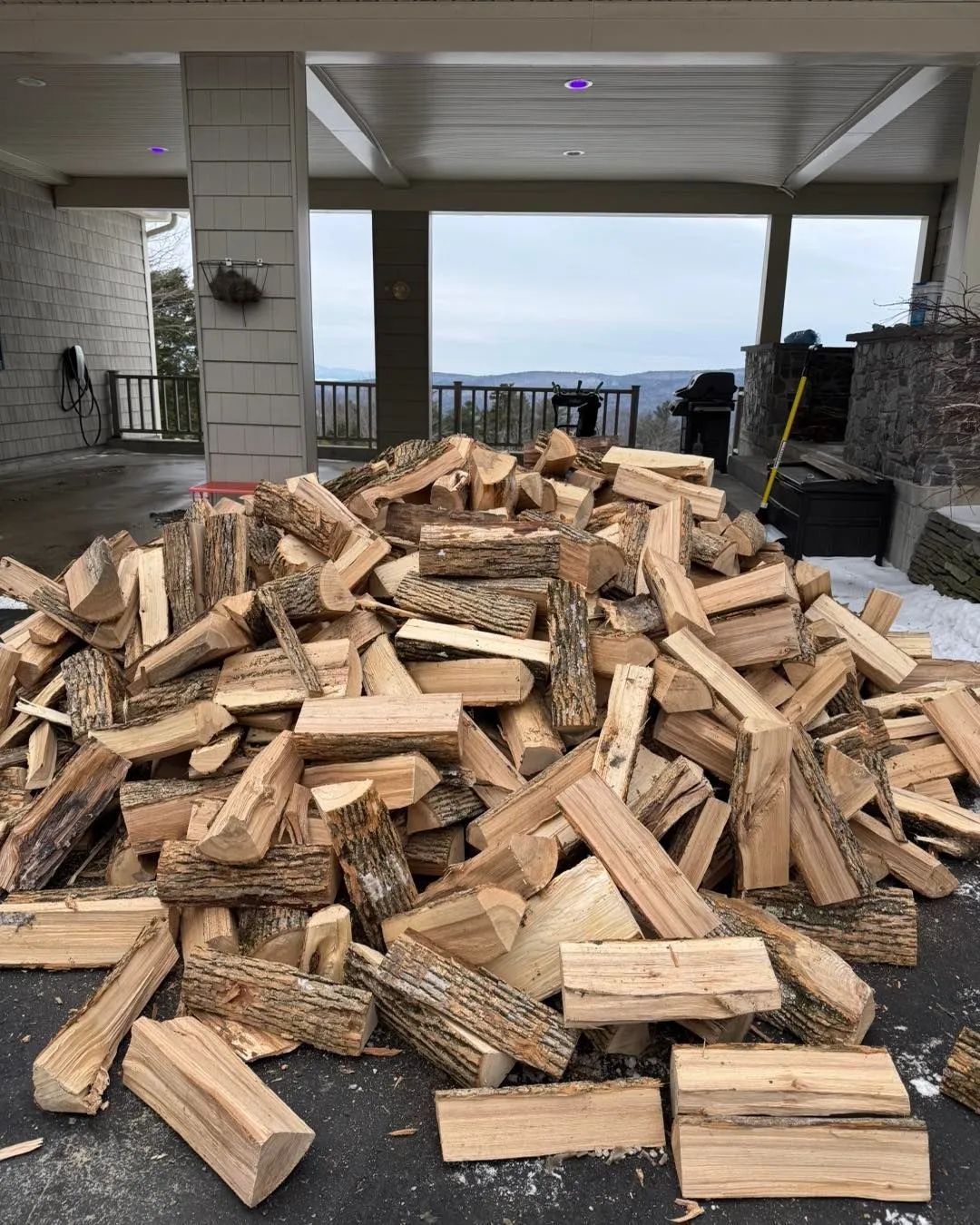
Getting the Most Heat Out of Your Maple
Plan a season ahead and maple rewards you. Get it split by late spring while it's still green and easy, stack it single-row off the ground where sun and wind can reach it, and cover only the top so the sides keep breathing. Come the first cold snap, you'll have wood that lights without a fight, throws steady heat, and holds a fire through the night. Sort the hard from the soft as you stack, save the sugar maple for the deep-freeze nights, and burn the lighter stuff earlier in the season when you don't need the stove roaring.
Firewood Supply New Hampshire, based in Middleton with over 7
years of experience, tests every load of seasoned maple under 20 percent moisture before it leaves the yard. That means no guessing whether a delivery is ready to burn or another season away from it — just dependable, clean-splitting hardwood that lights easily and holds heat through the coldest nights. Deliveries run across the Lakes Region and Seacoast, so the wood shows up seasoned and ready well before winter settles in.
TIP: Split one or two pieces from the middle of your stack and test the freshly exposed face with a moisture meter. The outside of a log dries first, so the inside tells you the truth about the whole piece.
Quick Answer: Among the hardwoods we sell, well dried ash, maple, and beech produce the least smoke, with cherry close behind. Birch makes somewhat more, and resinous softwoods such as pine and spruce make the most. Species is only part of the answer. Moisture matters more than any other factor, so a dry split of any hardwood will smoke less than a wet split of the best species. Dry the wood to about 20 percent moisture or less, size the splits to the firebox, give the fire enough air, and keep the chimney clean. Do those four things and even the livelier woods burn far cleaner.
You open the stove door to add a log and a puff of smoke rolls into the room. Or you step outside on a still evening and see a gray haze hanging over the neighborhood, with a few chimneys contributing more than their share. If you burn wood, you have probably wondered whether a different kind of firewood would settle the problem. It is a fair question, and the honest answer has two parts. Species does make a difference. But the biggest swings in smoke come from things that have nothing to do with the tree the wood came from.
We supply ash, beech, birch, cherry, and maple from our yard in Middleton, and we hear this question from people with wood stoves, inserts, fireplaces, and fire pits all over the Lakes Region and Seacoast. This comparison walks through each species, explains why some make more smoke than others, and shows you what to change if you want a cleaner fire this winter.
What Smoke Actually Is
Smoke is not simply the fire showing off. It is a mix of tiny particles, vapors, and gases that did not burn completely. Wood does not burn as a solid. As it heats, it releases gases that ignite and form the flames you see. When those gases burn fully, they produce little visible smoke. When they cool before they burn, or when there is not enough air or heat to finish the job, they escape up the flue as smoke.
That gives us a useful way to think about the question. Anything that keeps the fire cool or starved for air makes more smoke. Anything that helps the fire run hot and clean makes less. Wood can influence that in three ways: how much water it carries, how much resin or oil it contains, and how dense it is. Each of those shows up in the comparison below.
The Biggest Factor Is Not the Species
Before we rank the woods, it is worth saying plainly that moisture comes first. A log with a lot of water in it has to boil that water away before it can burn well. That cools the fire, slows the burn, and sends out heavy white smoke. State forestry programs and the EPA both point to about 20 percent moisture content or less as the target for wood that is ready to burn.
So a seasoned split of a smokier species will often burn cleaner than a wet split of a cleaner one. If you have ever wondered why your supposedly good hardwood made a mess, the wood was probably green or only half dried. Our seasoned versus green
firewood guide covers how to test it. For this comparison, assume every wood we discuss has been dried properly, because that is the fair way to compare them.
Ash: Clean, Easy, and Quick to Dry
Ash has an excellent reputation among people who burn a lot of wood, and the smoke is part of the reason. Dry ash lights easily, burns evenly, and tends to give a steady flame without much smoke. It has fairly low resin, and it dries faster than most dense hardwoods, which means it is more likely to be truly ready when you load it.
That last point matters more than it sounds. Ash is forgiving. A load that is a little short of perfect will still tend to burn better than the same load of a slower drying species. If low smoke and low fuss are your goals, ash is one of the safest choices.
Maple: A Dependable Low Smoke Hardwood
Maple is a longtime favorite for clean burning. The dense types, such as sugar maple, burn hot and produce a deep bed of coals, and a hot fire with a good coal bed is exactly the condition that keeps smoke low. Dry maple burns with a calm flame and very little visible smoke.
The catch with maple is time. It holds more moisture when green and usually needs closer to a year or more of good stacking to be ready. Maple that is rushed will smoke and hiss like any other wet wood. Give it time, and it rewards you with some of the cleanest burning you will find in a New England woodlot.
Beech: Very Hot, Very Clean, Very Patient
Beech is dense, burns hot, and holds heat well. When it is properly seasoned, it burns with little smoke and lasting coals, which makes it a favorite for overnight stove loads. The dense grain that makes it hard to split is the same thing that makes it hold such a long, steady fire.
Beech also asks the most patience. It can hold a lot of water, and it often needs a year or more of drying. Burn it too early and it will smolder and smoke. Burn it when it is ready, and it is among the best.
Cherry: Mild, Sweet, and Low on Smoke
Cherry is a lighter hardwood than beech or sugar maple, but it burns cleanly when dry. The smoke it does produce is mild and pleasant, which is why it is such a popular wood for cooking and smoking food and for fireplaces where the aroma matters. It splits easily, dries in a reasonable time, and burns with a calm flame.
Cherry does not hold a fire as long as the dense woods, so it often works best in a mixed load or in an open fireplace. If your priority is a clean, agreeable smell in the room, cherry is a strong contender.
TIP: If you cook over a fire or fire pit, keep a few splits of dry cherry separate from your heating stack. Using the same wood every time makes it easier to see how each species behaves.
Birch: Bright and Lively, With a Bit More Smoke
Birch is the one hardwood here that tends to make more visible smoke than the others. The bark carries natural oils that catch a spark quickly, which is why birch bark is such a popular fire starter. Those same oils burn off fast and can produce more smoke and a sootier flame, especially in a cool firebox. Birch also burns down faster than dense hardwoods, so a load can fade before the fire is fully hot.
That does not make birch a poor choice. It means birch is best used for what it does well. Use it to get a fire going, or mix it with denser wood so the fire gets hot quickly and the dense wood carries the burn. Splitting birch and drying it soon after cutting keeps the inside from breaking down under the bark, and it keeps the smoke down.
How These Five Hardwoods Stack Up
Heat output gets measured in BTUs per cord, a rough gauge of how much energy a fully seasoned cord of that species releases when it burns. Density drives most of the difference. Denser wood packs more fuel into the same space, which means more heat and longer-lasting coals. But density also means the wood holds more moisture when it's green, so the densest species usually need the most time to season properly.
Splitting ease, smoke output, and how the bark and grain behave when the wood is fresh all matter just as much as raw BTU numbers, especially if you're the one running the maul. A wood that burns hot but fights you every time you split it isn't necessarily the better buy for a homeowner working through a season's supply by hand.
Softwoods: Fast, Resinous, and the Smokiest Choice
Pine, spruce, fir, and other softwoods burn fast and light easily, and they contain more resin than hardwoods. Resin burns quickly and produces more smoke, more sparks, and more residue in the flue. Many chimney professionals advise using softwood only in small amounts, such as kindling, and relying on dense hardwood for the bulk of the fire.
Dry softwood is not dangerous when used in moderation. It is simply a poor match for a long, clean, controlled burn. If you have a stack of pine or spruce, save it for quick starts, shoulder season fires, or outdoor burning, and keep the hardwood for the stove.
How the Woods Compare at a Glance
If you want the short version, here is how the group falls out when every wood is properly dried.
Lowest smoke: ash, sugar maple, and beech. These burn hot, steady, and clean, and they build good coal beds.
Low smoke with a mild aroma: cherry. It burns cleanly, though it does not last as long as the dense woods.
Moderate smoke: birch and red maple, depending on the load. Birch is lively and quick, so mix it with denser wood.
Highest smoke: softwoods such as pine, spruce, and fir. They are fine as kindling but are not the best main fuel.
Remember that these differences are small compared with the effect of wet wood. A dry load of any hardwood will beat a wet load of the best species.
What Matters More Than the Species
If your fire makes more smoke than you would like, change these things before you change the wood.
Dry The Wood
Use a moisture meter and aim for 20% moisture or less before burning.
Give The Fire Air
Keep airflow open after reloading, allowing flames to burn hot before reducing air supply.
Start Hot
Use kindling and small splits to warm the flue and establish proper chimney draft.
Size The Splits
Choose appropriately sized logs that fit your firebox and allow sufficient airflow between pieces.
Keep The Chimney Clean
Schedule annual chimney inspections and sweeping to maintain proper draft and reduce smoke buildup.
Burn Only Clean Wood
Burn untreated, unpainted, unglued firewood, avoiding trash and materials that produce harmful smoke.
WARNING: Smoke that spills into the room, a stove that backdrafts, or a flue that seems blocked is a safety issue. Stop burning, let the fire die out, and have a qualified chimney professional look at the system before you use it again. Keep working smoke and carbon monoxide detectors in the home.
Choosing for Your Setup
For a wood stove or insert, dense hardwoods such as sugar maple, beech, and ash are the best match. They support the hot, steady burn that keeps smoke low. Keep birch or cherry on hand for startup and for mild days.
For an open fireplace, the choice is about what you want from the evening. Ash and maple give a clean, calm fire. Cherry adds a pleasant scent. A few splits of birch help the fire catch quickly.
For an outdoor fire pit, smoke is mostly about moisture and airflow. Dry hardwood in a pit with good air movement burns cleaner than any wet wood, and cherry or maple make a pleasant, mild fire.
If you are not sure what suits your appliance, tell us what you burn in. We can help you pick a mix of species and split sizes for how you heat.
Frequently Asked Questions
Which firewood produces the least smoke?
Well dried ash, sugar maple, and beech lead for low smoke, with cherry close behind. Moisture matters more than species, so the wood must be seasoned to about 20 percent or less.
Does hardwood smoke less than softwood?
Generally yes. Hardwoods are denser and contain less resin, so they burn hotter and cleaner. Softwoods burn fast and leave more smoke and residue, which makes them best as kindling.
Why does my seasoned wood still make a lot of smoke?
The wood may be dry outside and wet inside, or the fire may be starved for air or too cool. Test a fresh split, burn hot after loading, and check the chimney.
Is birch bad for smoke?
Birch makes somewhat more smoke than ash, maple, or beech because of its oily bark and fast burn. It works well for starting fires and in mixed loads when dry.
Does the size of the splits change how much smoke I get?
Yes. Splits that fit the firebox with room for air burn more completely. Oversized splits smolder, while tiny sticks burn out quickly. Medium, consistent splits are the most predictable.
Is smoke from cherry wood safe to cook with?
Yes. Cherry is a favorite for cooking and smoking food because its smoke is mild and pleasant. Use dry, clean splits and keep the fire hot and well ventilated.
Dry Hardwood Makes the Cleanest Fire
Ash, sugar maple, and beech lead the list for low smoke, with cherry close behind and birch best kept for starting fires or mixing into a load. Softwoods are better saved for kindling. Species still matters less than the conditions around it. Wood dried to about 20 percent moisture, splits sized to the firebox, enough air after each reload, and a clean chimney do more to cut smoke than any single choice of tree.
Firewood Supply New Hampshire
has supplied seasoned hardwood from Middleton, NH for over 7
years, and the customers who see the cleanest burns tend to follow the same habits. They test their wood, start the fire hot, and match the species to their stove, fireplace, or fire pit. A fire built that way burns steadily, throws off a pleasant warmth, and leaves little more than a faint wisp above the chimney on a cold evening.